


For more than a decade, federal agencies have sprinted toward modernization, migrating to the cloud, embracing enterprise platforms, and digitizing services. Those investments are paying off, but they’re also reaching their limits. Today’s missions are outpacing traditional software approaches.
Today, threats move faster. Operations are more distributed, and data originates everywhere, often in environments with limited connectivity or heightened security. Agencies operate across land, air, maritime, space, cyberspace, and public health environments that defy traditional enterprise boundaries.
To deliver mission advantage in real time, agencies need systems that do more than compute. They need systems that respond intelligently to changing conditions, and shrink the distance between operational need, technology solution, and impact. That requires a deliberate fusion of hardware and software into a cohesive, resilient, and intelligent mission ecosystem that drives operational advantage.
This is the next frontier for digital modernization: moving beyond standalone platforms toward full-stack, AI-first systems intentionally designed to work together across sensors, compute, data, and analytics. Across missions, when hardware and software converge with intention, agencies gain capabilities they’ve never had before.
Why it matters: missions happen in the physical world
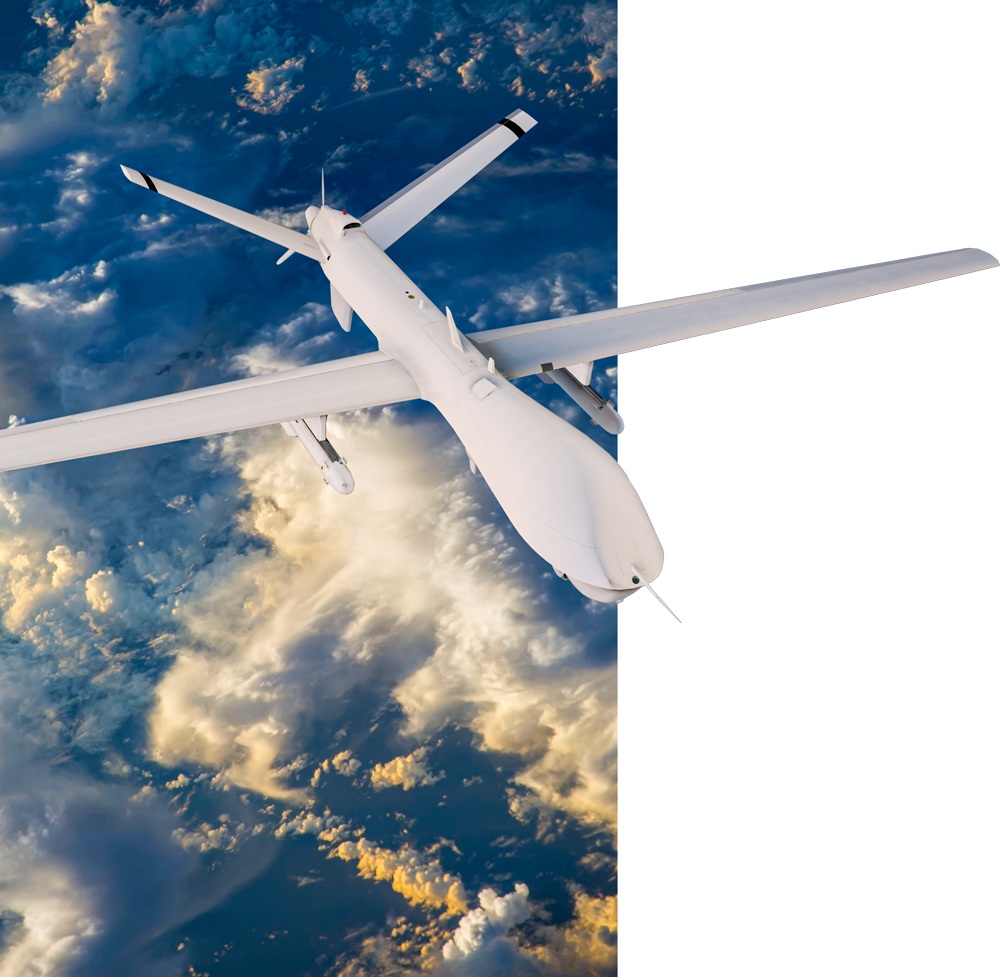
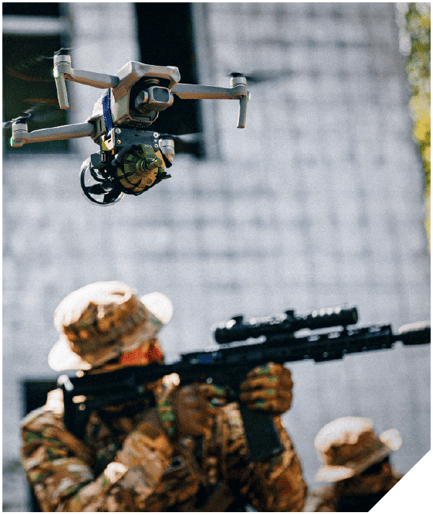
One of the defining realities of federal is missions happen increasingly at the edge of connectivity: in the field, at the border, on the ground, and in the air. Mission outcomes hinge on the ability to perceive and respond to change the moment it happens. A drone detecting movement along a remote border cannot wait for data to traverse back to a distant cloud. A supply chain movement in a contested environment cannot rely on manual updates.
When hardware and software operate as one ecosystem, agencies reduce latency, improve accuracy, and make decisions at the speed the mission demands. Missions require full visibility into the physical world: what’s moving, what’s sensing, what’s failing, what’s changing, and where immediate action is needed. To do this, data must flow seamlessly across mission domains and build in AI capabilities from the start. Integrated systems turn raw data into real-time intelligence and turn intelligence into immediate advantage.

The promise of integrated hardware–software systems is clear, but delivering at mission scale is a different challenge. Success depends on getting more than the technology right; it requires deliberate choices in architecture design, governance, and partnership from the outset. The following framework reflects what it will take to move from concept to operational reality.
Architecture design: mission-driven, AI-first, and built for the edge
At the core of successful hardware–software integration is architecture shaped by mission outcomes and environmental realities. Before selecting sensors, analytics tools, or cloud services, agencies must define the decisions that matter most: what information must be available at the edge, what actions occur locally versus centrally, how systems operate when connectivity is degraded, and what risks are unacceptable. These realities shape design before technology choices are made.
This mission-driven foundation is essential for an AI-first posture. AI cannot be bolted onto legacy systems and expected to deliver advantage. It must be designed into how data is generated, processed, secured, and acted upon across hardware and software. When architecture supports AI as a core function, agencies can move beyond automation toward faster, informed decision-making across domains.
Missions also evolve faster than traditional development cycles. Architectures must be modular, enabling continuous testing, evaluation, and updates without disrupting operations. Modular systems allow agencies to integrate new sensors, deploy updated AI models, and adapt to changing threats without reengineering the entire stack.
All of this must work at the edge, where missions are executed. Edge environments demand local autonomy, resilient data flows, and systems that degrade gracefully and recover intelligently when connectivity is limited or denied. Security must be embedded across every layer, from hardware to analytics, to protect capability without slowing operations.
This kind of architecture cannot be retrofitted. It must be engineered deliberately from day one.
Governance: Missions cross boundaries, but systems often don’t
Even the most well-designed architecture cannot deliver mission impact on its own. Hardware–software ecosystems rarely belong to a single bureau or system owner; they support missions that span agencies, operators, and partners with different authorities and risk tolerances. Governance becomes the connective tissue that determines whether architecture translates into operational advantage. Agencies must acknowledge this early and establish models that enable integration rather than constrain it.
Effective approaches bridge the broader innovation ecosystem, where stakeholders align early on data rules, interfaces, and operational roles. Clear agreements around data ownership, access, and sharing allow high-value information to move quickly to those who need it without compromising security or privacy. Successful governance collapses redundant paths and provides accountability for outcomes across all contributing organizations.
By treating governance as part of the system success, agencies can streamline approvals, reduce friction, and ensure integrated systems remain adaptable as missions evolve. When policy is intentional and mission-aligned, hardware–software ecosystems operate as a cohesive whole, enabling collaboration, accountability, and speed at scale.
Partnership: Integration requires a different kind of team
Governance sets the rules for integration, and people bring it to life. Successfully delivering and sustaining integrated systems ultimately will depend on partnerships that combine technical depth with real-world mission experience.
The complexity of integrated mission systems demands engineers who understand the constraints of a drone payload, the realities of edge compute, the patterns of distributed data systems, the requirements of mission operations, and the security posture of federal environments. They need to understand not only how to build hardware and software, but also how those systems behave under real operational conditions. This kind of multidisciplinary expertise is difficult to assemble and even harder to sustain.
This is where government must find partners who can collaborate across domains and bring multidisciplinary teams with strong mission pedigree. The right partners demonstrate more than technical credentials; they have experience working alongside operators, understanding mission constraints, and translating operational needs into durable system designs. They can integrate hardware, software, data, and AI while accounting for acquisition realities, security requirements, and the pace of operational change. Most importantly, they have proven their ability to co-develop, deploy, and sustain systems that perform in real-world conditions, delivering impact beyond the lab or prototype stage.
Where it’s delivering impact today
The convergence of hardware and software is enabling new capabilities across federal today, operationalizing AI in mission execution and unlocking speed, resilience, and insight that were previously out of reach.
DHS: Autonomous platforms for situational awareness
Consider DHS’ need to monitor expansive, remote, and often inhospitable terrain. Autonomous drones and fixed sensors operating in these environments are becoming essential force multipliers.
But these platforms only deliver value when they operate as part of a larger system. Sensors must process data locally to identify anomalies. Edge analytics must prioritize signals in real time. Secure communications must relay actionable insights to operators without overwhelming networks or personnel.
Integrated hardware–software ecosystems enable this orchestration. They allow DHS to extend its operational reach, reduce risk to frontline personnel, and respond faster to emerging threats, while maintaining security and reliability in challenging environments.

Defense: item-level visibility across disconnected supply chains
Logistics is one of the most complex and consequential domains for hardware–software integration. Equipment, supplies, and assets move constantly across locations, jurisdictions, and security postures, often through environments where connectivity is limited or adversarial.
Integrated tracking systems, combining RFID, sensors, edge compute, secure data environments, and analytics, provide item-level visibility that persists even when networks degrade. Edge processing ensures data is captured and validated at the point of movement. As connectivity becomes available, that data synchronizes across enterprise systems to inform planning, maintenance, and operational decisions.
The result is not just better data, but better warfighter readiness. Commanders gain confidence in what they have, where it is, and how quickly it can be deployed.

Public health: Detecting signals before they spread
In biosurveillance, the difference between an early warning and a delayed response can be measured in lives. Early detection of emerging threats depends on signals that appear first at the edge: within clinics, laboratories, or environmental monitoring stations.
Integrated systems enable these signals to be processed locally, reducing noise and highlighting anomalies. When shared securely across agencies, this information supports coordinated responses that span jurisdictions and organizations.
Hardware–software convergence turns fragmented data into a coherent operational picture, allowing public health leaders to act earlier, allocate resources more effectively, and protect communities more efficiently.

Space and multi-domain operations: Maintaining continuity under pressure
Space missions bridge orbital and terrestrial environments where latency, bandwidth, and reliability vary constantly. Sensors in orbit must operate autonomously, process data efficiently, and integrate seamlessly with terrestrial systems.
Integrated architectures ensure continuity across domains. Edge processing in space reduces data volume and prioritizes mission-critical information. Ground systems fuse space-derived data with other intelligence sources to support timely decisions.
In multi-domain operations, this integration is essential. Decision advantage depends on the ability to maintain awareness, coordination, and control across environments that operate at vastly different scales and speeds.

The future is full-stack, mission-driven, and already underway
Successfully integrating hardware and software is not a technology challenge alone, it is a systems challenge that demands discipline across architecture design, governance, and talent. As federal missions become more distributed and AI-first, the agencies that succeed will be those that treat integration as a core operational capability delivering at the speed of relevance.
The path forward is clear. Architectures must be designed for contested, disconnected environments. Governance must be intentional, enabling data sharing and collaboration across organizational boundaries without sacrificing security or accountability. Teams must blend hardware, software, and mission expertise to translate technical capability into operational impact. And above all, systems must be anchored in mission outcomes from the start and built to evolve as those missions change.
This is where experience matters. LMI is working alongside federal customers in real-world environments, designing, deploying, and sustaining integrated hardware–software solutions that operate where connectivity is limited, risks are high, and mission success is non-negotiable. By combining deep mission understanding with technical rigor, we help agencies move from fragmented capabilities to cohesive systems that deliver results at scale.
As federal agencies look to the next generation of technology-enabled missions, the opportunity is not simply to deploy more advanced tools, but to integrate them into ecosystems that work together across domains, organizations, and time. With the right foundation, hardware and software become more than components; they become force multipliers for the mission.
This is the technological frontier that will define the next decade of federal capability.